Por Ivan Dorneles Rodrigues – PY3IDR
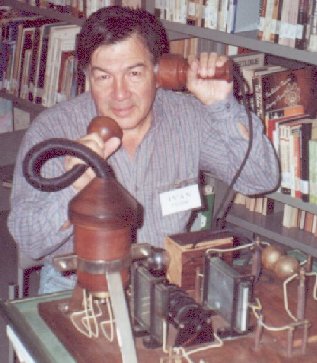
Já no final do século XIX, o telégrafo elétrico perdeu a vez, porque entrou em cena um tipo mais avançado: o telégrafo sem fio. Para se chegar a isso, foi preciso conhecer a eletricidade um pouco mais a fundo. As raízes deste trabalho estavam ligadas às contribuições de cientistas do passado que tinham primeiramente investigado a curiosa relação entre eletricidade e magnetismo.
Em 1820, Hans Christian Oersted (1777-1851), um dinamarquês, descobriu que uma corrente ao atravessar um fio era capaz de mover uma agulha de bússola, demonstrando, deste modo, que a eletricidade possuía um efeito magnético. Na mesma época, um físico francês, André-Marie Ampère (1775-1836), constatou que podia medir o efeito magnético de uma corrente elétrica. Ampère sabia que, assim como os imãs, dois fios conduzindo uma corrente elétrica atraiam-se e repeliam-se. A partir desse conhecimento conseguiu formular leis científicas regulando a eletricidade.
Os cientistas começaram então a usar a propriedade magnética da eletricidade para construir eletromagnetos. Enrolavam um fio em volta de um núcleo de ferro e quando a corrente passava através do fio o magnetismo era induzido ao ferro. Prof. Joseph Henry (1797-1878), um professor de matemática da Albany Academy, Nova York, construiu um eletroímã capaz de levantar uma tonelada.
Mas o Prof. Joseph Henry não se satisfez. Perguntou-se: se a eletricidade produz magnetismo por que o magnetismo não pode produzir eletricidade? Na Inglaterra, praticamente à mesma época, Michael Faraday (1791-1867), o físico mundialmente famoso, fazia a mesma pergunta.
Anteriormente, outros investigadores já se tinham ocupado do problema sem que, todavia, conseguissem resolvê-lo. Enganaram-se com o fato de que uma corrente elétrica estável induzia um campo magnético estável. Com base nesse fato, construíram aparelhos experimentais destinados a produzir magnetismo estável, na esperança de que esse campo induziria eletricidade em um fio.
Em 1831, Prof. Joseph Henry e Michael Faraday, trabalhando independentemente um do outro, chegaram a respostas idênticas para o problema. Descobriram que a solução não estava em usar um campo magnético estável, mas em estabelecer um campo variável. Puseram uma bobina fechada ou um círculo de fio perto de um imã e começaram a movimentar o ímã. Imediatamente foi induzida uma corrente elétrica que durou enquanto o ímã esteve em movimento.
O grande esforço subsequente para esclarecer as relações entre eletricidade e magnetismo foi desenvolvido por um cientista escocês chamado James Clerk Maxwell (1831-1879), que aos trinta anos era reputado um dos mais brilhantes físicos e matemáticos do mundo. Utilizando as experiências de Michael Faraday e Joseph Henry, Maxwell conseguiu chegar a estabelecer com precisão as equações matemáticas que regulam as leis que presidem as relações entre eletricidade e magnetismo. Mas não ficou só nisso. À base de suas equações, sustentou que esses dois campos atuavam conjuntamente para produzir uma nova espécie de energia chamada energia radiante. Fez então uma importante comunicação. De acordo com seus cálculos, existiriam ondas eletromagnéticas invisíveis que se moviam no espaço à velocidade da luz, ou seja, teorizou, apenas através de fórmulas matemáticas, que a eletricidade também se propagava em ondas. Quando você joga uma pedra na superfície da água, formam-se ondas. Da mesma forma, um fenômeno elétrico provoca ondas no ar. Isso significa que não é preciso um fio para transportar a eletricidade, ela pode “viajar” pelo ar!
A predição de Maxwell lançou o fundamento para a descoberta do raio-X e das ondas hertzianas.
Em 1851, o alemão Heinrich Daniel Ruhmkorff (1803-1877) inventou um aparelho capaz de transformar baixa tensão de uma pilha em alta tensão: surge o primeiro emissor de ondas eletromagnéticas.
Em 1885, o jovem alemão Heinrich Rudolf Hertz (1857-1894) dispôs-se a provar a teoria de Maxwell. Sua lógica era simples: se havia de fato, como Maxwell proclamara, ondas eletromagnéticas invisíveis, ele seria capaz de captá-las e utilizá-las. Construiu um aparelho simples no qual dois elétrodos, cujas extremidades eram separadas por um pequeno espaço, adaptavam-se ao circuito de uma bobina capaz de desenvolver uma corrente de alta voltagem. Quando o circuito era ligado, a alta voltagem fazia com que a corrente saltasse no espaço entre os elétrodos, produzindo faíscas.
Hertz tomou então um pequeno pedaço de fio e dobrou-o de modo a formar quase um círculo completo; mas em lugar de fechar as extremidades do fio, deixou uma pequena abertura entre elas. Pendurou o anel a uma pequena distância do circuito de alta voltagem e ligou a corrente. Aconteceu uma coisa notável: as faíscas do circuito de alta voltagem eram reproduzidas na abertura do pequeno anel de fio, embora não houvesse qualquer conexão entre as duas peças do aparelho e não existisse qualquer fio ligando o anel a qualquer fonte de energia.
Sua explicação desse fenômeno não deixou margem a dúvidas: as faíscas no circuito de alta voltagem radiavam as ondas eletromagnéticas invisíveis que Maxwell havia previsto. Essas ondas eram “recebidas” pelo fio em forma de anel e uma corrente era induzida, reproduzindo as faíscas originais. Hertz provara assim a teoria de Maxwell. O mundo da ciência saudou sua notável descoberta e, em sua homenagem, denominou as ondas de ondas hertzianas.
Mas a monumental façanha de Hertz não se limitou a um mero interesse teórico. Alguns engenheiros e inventores queriam ver logo a sua promessa traduzida em termos práticos. Se as ondas hertzianas podiam ser utilizadas para reproduzir faíscas, por que não se conceber um modo de adaptar as faíscas a um código, possibilitando assim a transmissão de mensagens por um sistema de “telegrafia sem fio”?
Nos anos que se seguiram imediatamente à descoberta de Hertz, foi realizado um grande número de descobertas interessantes.
Logo em seguida outro cientista, Augusto Righi (1850-1920), também descobriu a propriedade destas ondas, apurando que havia absoluta correspondência entre elas e as propriedades das ondas da luz visível.
Um francês de nome Édouard Eugène Désiré Branly (1844-1940) e um russo, Alexander Stepanovich Popov (1859-1906), fizeram experiências com eletricidade atmosférica. Embora trabalhando separadamente, ambos descobriram que um raio distante podia afetar um punhado de partículas soltas de metal. Essas partículas de metal normalmente ofereciam resistência à passagem de corrente contínua mas um relâmpago diminuía-lhes a resistência por um momento.
Édouard Branly construiu um circuito composto de uma bateria, um frasco pequeno contendo fragmentos de metal soltos e um fone. Ele verificou que a presença de eletricidade atmosférica podia ser acusada por um ruído no fone. O que acontecia, era que, em condições normais, a alta resistência dos fragmentos de metal soltos no frasco impedia que a corrente da bateria atravessasse o circuito facilmente. Mas quando um relâmpago ou outra forma de eletricidade atmosférica estivesse presente, as partículas se juntavam diminuindo a resistência elétrica e permitindo assim a passagem momentânea de uma onda maior de corrente contínua da bateria. Por sua vez, esta onda de eletricidade provocava um ruído no fone.
Um engenheiro eletricista inglês, Oliver Joseph Lodge (1851-1940), achou que esse pequeno frasco contendo fragmentos de metal podia ter outras utilidades. Denominou-o de coesor porque a energia atmosférica fazia as partículas de metal ficarem coesas, ou juntarem-se. Oliver Lodge descobriu que um coesor reagia a faíscas produzidas por um circuito de alta voltagem do mesmo modo por que reagia à eletricidade atmosférica. Em breve, passou a utilizá-lo como um detector de laboratório para ondas hertzianas.
Nikola Tesla (1856-1943) havia descoberto o princípio do campo magnético giratório e dedicava-se a encontrar uma maneira de viabilizar a distribuição irrestrita e gratuita da energia elétrica.
Nikola Tesla, de origem sérvia, imigrou ainda jovem para os Estados Unidos. Tornou-se cidadão americano em 1891.
Ainda na Europa, seus inventos chamaram a atenção de Thomas Alva Edison (1847-1931), que o contratou para trabalhar em Paris e, em seguida, em Nova York. Em 1885 desligou-se dessa atividade para fundar dois anos depois o seu próprio laboratório – a Tesla Electric Company. Em 1888, depois de ouvir a conferência do cientista “Um novo sistema de corrente alternada para motores e transformadores” no American Institute of Electrical Engineers (AIEE), George Westinghouse Electric Co., fabricante de equipamentos elétricos fundada três anos antes. Essas experiências mantiveram o interesse de Tesla sobre correntes alternadas e o conduziram a fazer, em maio de 1891, a primeira demonstração pública das suas pesquisas com alta frequência.
Em 1892, depois de trocar informações com Heinrich Rudolf Hertz sobre a transmissão sem fio, foi o primeiro a patentear a amplificação de voltagem através de ondas terrestres estacionárias. Em meio aos experimentos com geradores elétricos, inventou o controle remoto. A descoberta levou-o a aprofundar suas pesquisas sobre formas de comunicação sem fio. Em 1900 iria sugerir o conceito moderno de radar. Esses avanços em período tão curto de tempo compõem um personagem intrigante e fascinante da ciência ocidental. Além de abordar as circunstâncias em que Tesla realiza suas experiências com ondas terrestres, aqui interessa considerar um aspecto particular no seu trajeto de descobertas científicas: o dos estudos sobre a transmissão wireless. Também é ocasião para fazer o seu nome e as suas experiências circularem no campo da comunicação e, nesta, da radiodifusão.
Nikola Tesla está entre os pioneiros nas tentativas de transmissão sem fio à distância porque as experiências realizadas com as ondas terrestres estacionárias levaram-no a vislumbrar que nelas estava o caminho capaz de conduzir a um sistema mundial integrado para a distribuição centralizada de recursos eletrônicos, muitos dos quais a serem inventados.
Apesar de ter conseguido as primeiras patentes de rádio em 1900, três anos depois de encaminhar o pedido inicial, o cientista teve os seus direitos retirados em 1904 pelo Departamento de Patentes dos Estados Unidos, que reviu decisões anteriores e transferiu para Guglielmo Marconi a autoria da invenção do rádio. Na época, o cientista italiano presidia a Marconi Wireless Telegraph Company Ltd. que, com ações nas Bolsas de Nova York e Londres, foi a primeira multinacional a operar no setor de comunicação sem fio. Ao redor da companhia juntaram-se empresas de equipamentos de eletricidade, como a Westinghouse, e instituições financeiras, como o Banco Morgan, interessadas em explorar novos segmentos de consumo geral suscitados pelo uso diversificado da energia elétrica. Formava-se assim um aglomerado de negócios que envolvia eletricidade e comunicação em larga escala.
A opção industrial deixou de lado as experiências com os transformadores (as bobinas Tesla – Tesla’s coils) inventados pelo cientista, que conseguiam transmitir e receber sinais claros de rádio quando sintonizados na mesma frequência, amplificando a eletricidade captada através da ressonância. Foram desconsideradas experiências iniciadas em 1885, um ano antes de Marconi registrar a primeira patente do telégrafo em Londres. Naquela data, Tesla, em Nova York, estava em condições de transmitir e captar um sinal de rádio a quase 100 quilômetros de distância.
As experiências com a eletricidade conduziram Nikola Tesla às ondas de rádio. Suas invenções no campo de correntes de alta frequência e alta voltagem, testadas por meio de osciladores, chegavam a produzir vários milhões de volts.
Documentos e registros dos trabalhos do cientista Nikola Tesla estão reunidos no Museu Nikola Tesla em Belgrado. O primeiro passo para a reinserção do seu nome na cronologia das telecomunicações foi dado em 1943 pelo Departamento de Patentes dos Estados Unidos ao devolver para o cientista a autoria da invenção do rádio. O reconhecimento oficial foi motivado por questões político-econômicas: Marconi tentava, na época, receber direitos pela utilização da sua invenção no país. Com a devolução da autoria de 12 patentes de rádio a Nikola Tesla, os Estados Unidos livraram-se de uma demanda incômoda e cara.
Todo esse conhecimento acumulado sobre eletricidade foi aplicado nos aparelhos inventados por um brasileiro, gaúcho, o Padre-cientista Roberto Landell de Moura (1861-1928), que a partir de 1893 realizava, na capital paulista, do alto da Av. Paulista para o alto de Sant’Ana, as suas transmissões de telegrafia e telefonia sem fio, com aparelhos de sua invenção. Ele inventou e patenteou no Brasil, em 1901, vários aparelhos e nos Estados Unidos, em 1904. patenteou o Transmissor de Ondas, o Telefone sem fio e o Telégrafo sem fio. Landell, inteligentemente, combinou vários elementos conhecidos, como a bobina de Ruhmkorff (poderia ser a de Tesla), o Tubo de Crookes e o coesor e descoesor, inventos de Édouard Branly e Oliver Joseph Lodge, aos seus aparelhos, ordenando e aperfeiçoando, em circuitos inéditos de sua invenção. Esse era um costume dos inventores da época. Agregavam aos seus aparelhos inventos já conhecidos, com isso aperfeiçoavam suas invenções. Roberto Landell de Moura, desde o início de suas experiências, sempre procurou transmitir não só sinais telegráficos como também a voz humana, o áudio, coisa que os seus contemporâneos não se preocuparam. Eles estavam centrados somente na transmissão de sinais telegráficos. Portanto, Landell de Moura foi o primeiro a transmitir a voz humana, áudio, por um aparelho sem fio, o Telefone sem fio, que era um transceptor, ou seja, um aparelho que transmitia e recebia por ondas eletromagnéticas e ondas luminosas. A palavra “sem fio”, na época, era para designar somente uma forma de telégrafo, não se estabelecia sua relação com o telefone, com rádio, com fon2ia, áudio. Aqui está o pioneirismo do ilustre cientista e inventor brasileiro. O jornal do Commercio do Rio de Janeiro, no dia 10 de junho de 1900, na página 2, registra as experiências bem sucedidas, as transmissões pioneiras da fonia e sinais telegráficos, por ondas eletromagnéticas e ondas luminosas, realizada no dia 03 de junho de 1900.
Roberto Landell de Moura, já em 20 de agosto de 1904, nos Estados Unidos, idealizava um projeto para a transmissão da imagem à distância que denominou The Telephotorama.
Em 31 de agosto de 1913, quando pároco da Igreja do Menino Deus, em Porto Alegre, aperfeiçoa seu projeto de transmissão da imagem à distância, agora dando o nome de Televisão. A história oficial diz que, em 1926, o escocês John Logie Baird fez a primeira demonstração pública do que se poderia chamar de televisão. Landell de Moura também é precursor da referida invenção.
O mérito do Padre Roberto Landell de Moura é ainda maior se considerarmos que desenvolveu tudo sozinho. Era dessas pessoas que além do seu lado místico, integrava em sua personalidade o gênio teórico e o lado prático para a construção de seus aparelhos. Ele era o cientista, o engenheiro e o operário ao mesmo tempo. E era sacerdote! Não dispunha de todo o tempo para as suas pesquisas. Os cientistas inventores contemporâneos além de dispor de todo o tempo possível, possuíam apoios e patrocínios e contratavam excelentes auxiliares. Eram bem sucedidos empresários.
Mas, apesar de ter conquistado três patentes nos Estados Unidos, infelizmente, com Roberto Landell de Moura não houve interesse e nem reconhecimento dos seus trabalhos pelas autoridades, empresários e povo brasileiro. Até hoje sua obra é pouco conhecida.
Alexander Stepanovitch Popov (1859-1906), então com 36 anos, professor de física e engenharia elétrica na Escola Naval de Fusileiros Navais em Kronstadt, Rússia, projetou um rádio receptor que permitia receber sinais transmitidos por meio de ondas eletromagnéticas. Nascido em Turinskiye Rudniki, Rússia, estudou em St Petersburg, retornando a St Petersburg como professor em 1901. Independentemente de Guglielmo Marconi, Popov é aclamado na Rússia como o inventor do telégrafo sem fios. Dedicou-se a estudar os fenômenos radioelétricos produzidos nas tormentas atmosféricas, o que levou à descoberta da “Antena”. Em 1896 (possivelmente em 1895) melhorou o receptor de Oliver Joseph Lodge adicionando um fio suspenso como uma antena, (Popov foi a primeira pessoa registada a adotar este procedimento) e blindando as bobinas para neutralizar o efeito das faíscas nos transmissores. No dia 7 de maio de 1895, transmitiu, recebeu e decifrou a primeira mensagem telegráfica sem fios com sucesso. O cientista russo Alexander Popov tinha enviado uma mensagem de um navio da Marinha russa distante 30 milhas no mar, para o seu laboratório em St. Petersburg, Rússia. Era um feito incrível, mas o mundo não tomou conhecimento. A intensão da Marinha russa era monopolizar esta tecnologia poderosa, incitando Popov a não dar qualquer notícia das suas descobertas. Considerado como um fantástico segredo de estado, Popov perde qualquer chance de fama mundial.
O italiano Guglielmo Marconi, que viveu de 1874 a 1937, a partir de 1895 iniciou suas experiências e também conseguiu construir um aparelho de telégrafo que transmitia sinais à distância, sem a necessidade de fios. Marconi também utilizou elementos conhecidos, como o coesor, inventado por Édouard Branly e Oliver Lodge, e a antena, descoberta pelo russo Alexander Popov, complementando-os com outros de sua invenção. No começo de suas experiências, Marconi não se preocupou em transmitir áudio, voz, somente transmitia sinais telegráficos, o Código Morse. Somente em 1914, realizou os primeiros experimentos de radiofonia, na cidade de Spezia, sobre o navio “Regina Elena”, conseguindo transmitir a palavra a 71 quilômetros.
Transmissores a centelha difundem, essencialmente, estática, que se espalha entre as frequências, e quaisquer dos transmissores nas mesmas cercanias interferem uns com os outros, tornando a comunicação virtualmente ininteligível. Além disso, a própria natureza do sinal torna a escuta por outros não apenas possível, mas inevitável, e é impossível manter segredos. Com o rápido aumento no uso do rádio, tornou-se crucial descobrir algum modo de sintonizar o transmissor e receptor na mesma frequência, para filtrar a interferência. Esta foi uma conquista de Oliver Joseph Lodge com sua patente-mestre de 1897.
Em março de 1900, o próprio Marconi depositou uma patente para a sintonia, que chamou de “afinação”. A patente, de número 7.777, chamada de “os famosos quatro setes”, destinava-se a ser o tema de mais litígios que praticamente qualquer outra patente na história do rádio. E por boa razão, já que infringia fragorosamente a patente de Oliver Lodge. Não podemos negar que a versão de Marconi era uma melhora significativa sobre a de seu concorrente, mas usava todos os aspectos cobertos pela patente de Lodge. Em vez disso, parece que eles achavam que Lodge não lutaria, e durante onze anos a Marconi Company não pagou quaisquer direitos a Oliver Joseph Lodge e Alexander Muirhead (1848-1920), que nesse meio-tempo haviam formado a Agência Lodge-Muirhead. Não está claro por que Lodge permitiu-se ser logrado, mas sua indignação acumulou-se gradualmente e, no fim, partiu para a guerra. Em 1911, sua patente foi estendida para mais sete anos, o que tornou a posição legal de Marconi insustentável. Assim, a Marconi Company comprou a Agência Lodge-Muirhead e reteve Lodge como consultor, mas, de acordo com seu próprio relato, jamais o consultaram para nada. Biografias de Marconi, não muito diferentes neste aspecto daquelas de Bell, tendem a resumir todo este caso em uma sentença: a Marconi Company adquiriu as patentes de Oliver Lodge em 1911.
Mas Marconi não foi apenas um dos inventores do telégrafo sem fio. Também foi um bem-sucedido homem de negócios. Ganhou muito dinheiro com sua invenção e dirigiu uma empresa de telégrafos, a Marconi Wireless Telegraph Company. Ele próprio fez as primeiras transmissões à distância, no meio do mar, com navios ingleses. Acabara-se o tempo de ficar deitando cabos compridíssimos no fundo do mar. Agora, o mundo ficava ainda menor, e os povos mais próximos, com Marconi telegrafando pelas ondas.
Durante todo esse tempo, ninguém pensou em utilizar o sem fio como meio de entretenimento, tido que era, tão somente, como processo de comunicação pura e simples, ponto a ponto.
O Dr. Frank Conrad, engenheiro da Westinghouse em Pittsburgo, foi um dos homens que deu ao rádio, como entretenimento, o seu grande impulso. Fê-lo nas horas de ócio, em sua própria casa. Substituiu o manipulador telegráfico do seu aparelho por um microfone, e pronto! Em lugar de pontos e barras, surgiu música.
O piano, o fonógrafo e quaisquer discos que lhe sucedesse ter à mão foram ao ar. Imagine-se a reação daqueles que o ouviram e os seus pedidos de bis… e biss… até que Conrad se viu obrigado a estabelecer horários certos para as suas transmissões. Está claro que os ouvintes de Conrad espalharam a notícia da sua boa sorte. Outros quiseram ouvir, e uma loja de Pittsburgo aumentou o número de ouvintes organizando uma venda de receptores a preços baixos.
Estava nascendo a comunicação em massa, ponto-massa, antes era ponto à ponto, e o mundo nunca mais seria o mesmo. Conrad dera à telegrafia sem fio nova dimensão de entretenimento.
O inglês John Ambrose Fleming (1849-1945), que era assistente de Thomas Alva Edison, em 1883, quando Edison fazia experiências com filamentos de carbono para lâmpadas elétricas, notou que o interior das lâmpadas ficava aos poucos enegrecida. Edison julgou que o carvão no vidro viesse do filamento. Em seguida, introduziu uma pequena placa de metal na lâmpada e ligou-a ao polo positivo de uma corrente de bateria a fim de aquecer o filamento de carvão. O resultado foi surpreendente. Edison descobriu que a placa atraía uma pequena corrente embora estivesse separada do filamento. No entanto, quando a placa era ligada ao polo negativo da bateria a corrente não circulava. Treze anos mais tarde, em 1896, a teoria do elétron forneceria a Fleming a explicação para o estranho fenômeno conhecido como “efeito de Edison”. Teorizou que o filamento de carvão aquecido até ficar incandescente “pululava” de elétrons. Posto que carregados de eletricidade negativa, os minúsculos elétrons eram atraídos através do vácuo existente dentro do tubo pela placa positivamente carregada. Quando a placa era carregada negativamente os elétrons eram repelidos. De acordo com Fleming, isto explicava porque nenhuma corrente circulava quando a placa estava ligada ao polo negativo da bateria.
Utilizando uma variação da lâmpada de Edison, Fleming idealizou um “retificador”, um dispositivo para converter a corrente alternada em corrente contínua. Envolveu um filamento de carvão num envólucro de metal. Como a corrente fluía do filamento aquecido para o envólucro de metal somente quando este estava positivamente carregado, metade de cada ciclo alternado passava através do tubo. E essa metade de ciclo sempre corria numa direção, do filamento para a placa. Fleming denominou o tubo de “válvula”, pois era semelhante a um registro que controla a saída de um líquido. Os direitos sobre a válvula de Fleming foram adquiridos pela companhia de Marconi.
Em 1906, um engenheiro norte-americano, Lee De Forest (1873-1961) também, sem saber, utilizou o efeito de Edison, chegando à descoberta da válvula eletrônica que denominou de “Audion”. Lee De Forest e Fleming perseguiam objetivos diferentes. O Fleming via-o como um meio de transformar corrente alternada em corrente contínua, enquanto Lee De Forest tinha usado o mesmo fenômeno para detectar ondas hertzianas. A válvula eletrônica “Audion”, produzindo variações eletromagnéticas, era capaz de transmitir as configurações da voz humana. Começava-se, então, a etapa final para a descoberta do rádio.
Lee De Forest, com a ajuda de Jack Hogan, começou a elaborar um novo projeto, a construção de um transmissor de arco de carvão. Lee passou imediatamente a trabalhar na construção de um rudimentar transmissor de arco de carvão que seria alimentado por uma corrente contínua de 220 volts. O aparelho incluiria também um circuito de microfone para transmissão da voz. O princípio era o mesmo da telegrafia sem fio, com a diferença de que o arco de carvão substituiria a abertura da faísca (lembram que os aparelhos até então eram por centelhas). Dado que um arco gerava uma sucessão contínua de ondas hertzianas, a voz no microfone mudaria constantemente a resistência do circuito. Assim, uma maior ou menor parte da corrente da voz formaria um arco através do elétrodo a qualquer momento. O resultado seria a emissão de ondas hertzianas de força variável, ou amplitude. Quando as ondas eram captadas pela antena receptora e levadas para o elétrodo de grade da Audion, elas regulavam o fluxo da corrente através do tubo. Essa corrente variando constantemente era então convertida em ondas sonoras nos fones. De modo que tudo era bastante simples. Em 31 de dezembro de 1906, o transmissor e o receptor foram terminados. Aqui já estamos tendo o rádio propriamente dito, substituindo o convencional telefone sem fio ou telegrafia sem fio. Com o telefone sem fio uma pessoa podia falar com outra sem fio, principalmente para falar com os navios. Era um contato ponto a ponto. Já com o transmissor do Lee De Forest não precisaria de um operador especializado, era só apertar num botão e falar no microfone ou ouvir nos fones. E o fascinante era que uma só transmissão podia ser ouvida por centenas e até milhares de pessoas com receptores individuais. Isto é broadcasting, radiodifusão. Notícias, música e mesmo peças dramáticas podiam ser ouvidas por uma multidão que de outro modo jamais teriam esta oportunidade. O rádio pode encurtar as distâncias e transformar o país inteiro e o planeta em um só imenso auditório.
No início de fevereiro de 1907, Lee De Forest começou uma série de experiências em radiodifusão no laboratório do último andar do edifício Manhattan’s Parker, na esquina da rua 19 com a Quarta Avenida, a fim de testar a qualidade do novo transmissor de arco de carvão. Logo a Companhia de Radiotelefone De Forest foi transformada numa organização maior, conhecida como Companhia de Radiotelefone, com um capital de dois milhões de dólares.
O próprio Lee De Forest fez uma das primeiras transmissões de rádio, em 1908, a convite do Exército Francês, com o novo equipamento na Estação Militar da Torre Eiffel, em Paris. O Cel. Ferrié, chefe de Rádio do governo francês, instalara uma antena gigantesca no alto da torre. O fio principal estava ligado a um barracão de madeira localizado a 65 metros, no lado sudeste da mundialmente famosa estrutura de aço. Assistido por Nora Blatch e vários homens do Cel. Ferrié, Lee instalou o transmissor de arco de carvão no barracão. O plano era transmitir música de fonógrafo, colocando um microfone de carvão junto ao alto-falante, tal como nas primeiras irradiações realizadas em Nova York. Finalmente, estava tudo pronto. Lee ligou o transmissor ao tempo em que pediu à sua assistente e esposa Nora Blatch que pusesse o fonógrafo em funcionamento. A música saía do alto falante e inundava o pequeno barracão apinhado de gente.
Durante toda a noite, Lee De Forest e sua esposa Nora Blatch, revezaram-se na tarefa de por discos no fonógrafo. Por fim, perto do amanhecer, desligaram o transmissor e voltaram exaustos para o hotel a fim de aguardar os resultados.
Às nove horas, o Cel. Ferrié apareceu trazendo no rosto um sorriso largo. Pediram o café da manhã e sentaram-se para ouvir o relato.
“As notícias são excelentes”, disse-lhes. “Tantas tinham sido as estações de sem fio que telegrafaram dizendo que haviam recebido o seu sinal que era difícil guardar o número. Sem dúvida alguma, muitas outras comunicarão o resultado pelo correio. Já sabemos, no entanto, que a música foi ouvida em estações situadas a cerca de duzentos e cinquenta quilômetros de Paris! Temos bastante razões para júbilo”.
Dois dias depois, Lee e Nora receberam um novo relatório de Ferrié. Estações localizadas na costa do Mediterrâneo, próximo a Marselha, numa distância de aproximadamente oitocentos quilômetros, haviam captado a transmissão da Torre Eiffel!
Antes de deixar Paris, Lee recebeu um cabograma do Capitão Darby, de Nova York. Em virtude do êxito da demonstração efetuada na França, o governo italiano tinha encomendado quatro aparelhagens de equipamento radiotelefônico. A carga estaria a caminho da Itália dentro de duas semanas. Fique na Europa para instalar, aconselhava o telegrama de Darby.
Enquanto esperavam, os De Forests visitaram a Alemanha, onde entraram em contato com os principais cientistas empenhados no trabalho do sem fios e realizaram novas demonstrações com o Audion e o transmissor de arco. Em cada cidade por que passavam os jornais publicavam relatos inteiros e entrevistas.
Da Alemanha seguiram para Spezia, na Itália, a fim de receber o carregamento que vinha de Nova York. O equipamento foi desembalado, instalado e, durante cinco semanas, testado, tendo sido durante todo esse tempo assediado pelos repórteres italianos que escreveram extensos artigos sobre “o americano De Forest que aperfeiçoara o telefone sem fio superando o grande Marconi”.
E, em 1910, transmitiu-se a voz do maior cantor de ópera de todos os tempos, Enrico Caruso, diretamente do Metropolitan Opera de Nova York.
Em 1915, David Sarnoff, um dos pioneiros do rádio comercial nos Estados Unidos, ex-operador de telégrafo, que era empregado da firma Marconi, enviou um memorando ao vice-presidente Edward J. Nally da Marconi Wireless Telegraphy Company of America, com os seguintes dizeres:
“Tenho em mente um projeto de desenvolvimento que poderia tornar o rádio uma “utilidade doméstica”, assim como o piano […] a ideia é levar música aos lares por meio das ondas de rádio. […] O receptor pode ser projetado na forma de um “rádio caixa de música” e ajustado para vários comprimentos de onda, que podem ser alternados pelo simples acionamento de uma chave ou pressão de um único botão.
Se apenas um milhão de famílias gostassem da ideia, ela poderia gerar […] considerável renda.
O memorando de David Sarnoff foi rejeitado. Uma década mais tarde, nos anos 1920, as vendas de aparelhos de rádio pela companhia que fundou – RCA – tornaram-na uma das empresas industriais mais poderosas do mundo.
Em 1916, deu-se a rebelião na Páscoa Irlandesa e houve uma emissão de rádio. Até então, normalmente o sem fio era utilizado pelos barcos como telégrafo mar-terra. Os rebeldes irlandeses utilizaram o “sem fio” de um barco, não para transmitir uma mensagem em código, mas para uma emissão radiofônica, na esperança de que algum barco captasse e transmitisse a sua estória à imprensa americana. E foi o que se deu. A radiofonia já existia há vários anos, sem que despertasse qualquer interesse comercial. Foram os radioamadores e seus fãs que conseguiram as primeiras providências práticas nesse sentido.
O rádio transformou todos os países onde foi introduzido. Apesar dos telégrafos e telefones enviarem mensagens a uma velocidade extremamente alta, os dois podiam apenas conectar um indivíduo a outro. Mas as ondas de rádio não estavam presas dentro de um fio de cobre. Como a natureza dessas ondas é se espalharem em todas as direções, o rádio enviava sua informação de forma tão ampla que broadcasting se tornou o termo popular que descreve esse novo efeito.
De repente, as marcas nacionais tornaram-se muito mais populares; equipes esportivas locais passaram a atrair torcedores de todo o país; o culto de celebridades – como se deu com as estrelas de Hollywood – se generalizou. Ouvintes sentiam que os programas eram dirigidos a eles pessoalmente.
E a política também mudou.
Muitos inventores e outros interessados começaram a imaginar novas formas de usar esse novo aparelho.
A história inicial do rádio é tão confusa, diria até polêmica, que os historiadores só agora começam a entendê-la.
Destas pesquisas, minhas conclusões são de que a invenção do rádio não foi obra de um inventor. A paternidade do rádio é fruto do trabalho, das experiências e invenções de vários ilustres cientistas-inventores contemporâneos da área.
Efetivamente, a primeira estação de rádio regular do mundo foi criada em 1920 em Pittsburgh, na Pensilvânia, Estados Unidos. Tinha como prefixo de chamada KDKA. Em 1921 já eram quatro emissoras. Em 1922 eram 29, e em dezembro do mesmo ano o número delas já se elevava a 382.
A primeira emissora a transmitir um anúncio comercial foi a WEAF de Nova York em 1922, emissora pertencente à Telephone and Telegraph Co. Cobrava 2 dólares por 12 segundos e 10 dólares por 10 minutos. Em 1926 esta emissora foi vendida à RCA e passou a chamar-se National Broadcasting Co. Foi quando começou a funcionar uma das maiores redes de rádio dos Estados Unidos, a NBC. Em 1927 era organizada a Columbia Broadcasting System – CBS. E assim estava consolidada a radiodifusão nos EUA.
A BBC – British Broadcasting Corporation de Londres inaugurou seus serviços em 14 de novembro de 1922, muito embora estivesse fazendo experiências já em 1919.
RADIODIFUSÃO NO BRASIL
A história do rádio no Brasil tem início, realmente, em Pernambuco, quando pelos idos de 1910 se tem notícia da existência de amadores em TSF – Telegrafia Sem Fio, que se intercomunicam, àquela época, através de aparelhos por eles próprios construídos, apesar de ser a radiotelegrafia de uso privativo do Governo, especialmente durante a I Guerra Mundial, existindo, inclusive, legislação própria sobre o assunto, que não permite sua prática aos amadores.
A radiotelegrafia é, sem dúvida, precursora do rádio como veículo de comunicação e para os amadores da época, da comunicação à distância, verdadeira paixão mantida por pernambucanos como um hobby, nasce o pioneirismo de Pernambuco em termos de rádio. Pioneirismo que fica patente com a inauguração, em 06 de abril de 1919, do Rádio Clube de Pernambuco, registrado pelo Jornal do Recife em sua edição de 07 de abril de 1919, em matéria sob o título “Rádio Club”, da seguinte forma:
“Consoante convocação anterior realizou-se hontem na “Escola Superior de Eletricidade”, a fundação do “Rádio Club”, sob os auspícios de uma plêiade de moços que se dedicam ao estudo da eletricidade e da telegrafia sem fio.
Ninguém desconhece a utilidade e proveito dessa agremiação, a primeira no gênero fundada no país. Foram tomadas diversas medidas, como sejam, designações de comissões para se entenderem com as autoridades do Estado, etc. (…)”.
Na época, é divulgada também a formação da Diretoria do Rádio Clube, recém-inaugurado. Dela constam um presidente, eleito por aclamação e demais membros disputando eleição, assim constituída:
Presidente: Augusto Joaquim Pereira
Secretário: Alexandre Braga
Thezoureiro: Arthur A. Coutinho
Orador: Carlos Rios
1º Suplente: Severino Mendonça
2º Suplente: Alfredo Watts
3º Suplente: Ismar P. Just
Dentre as primeiras medidas tomadas constam a formação de uma comissão para a imprensa, da qual participam João H. P. Lyra, Carlos Rios e Arthur A. Coutinho; a composição de uma comissão de relações com Autoridades, visto que, durante a I Guerra Mundial, sendo o uso da radiotelegrafia privativo do Governo e havendo legislação sobre o assunto, não permitindo que os amadores a praticassem, faz-se necessária tal comissão que, através de entendimentos com autoridades tentam revogar a Lei que a essa prática se refere, tirando assim, os radioamadores da clandestinidade. Dessa comissão fazem parte o próprio Presidente do Rádio Clube, Augusto Joaquim Pereira, Alexandre Braga e Abelardo R. Barros. É também composta uma comissão para confeccionar o Regimento Interno da nova Associação, constando dela os senhores Ismar P. Just, Severino Mendonça e Santos Crespo.
Logo após a sessão inaugural é imediatamente endereçada ao Sr. Ministro da Viação o seguinte telegrama:
“Amadores telegrafia sem fio, hoje reunidos Escola Superior de Eletricidade, fundaram RÁDIO CLUB fim propagar conhecimentos techinicos associados. Confiam vosso patriótico apoio. Saudações. Augusto Pereira presidente”.
Em resposta a esse telegrama o Presidente do Rádio Clube recebe a seguinte carta, assinada pelo Sr. Feliciano de Souza Aguiar, auxiliar de Gabinete do Senhor Ministro da Viação:
“Exmo. Sr. Augusto Pereira
Sua Ex. o Sr. Ministro da Viação tendo recebido vosso telegrama de 6 do corrente, participando a fundação do Rádio Club, incumbiu-me de escrever agradecendo a gentileza da comunicação e apresentar os sinceros votos de prosperidade.
S. Ex. pede a fineza de transmitir aos demais associados os mesmos votos. Cordiais Saudações.”
Em 27 de abril daquele mesmo ano, em reunião de Assembléia Geral, são aprovados os Estatutos do Rádio Clube na Escola Superior de Eletricidade. De seus Estatutos, que hoje se encontram na Fundação Joaquim Nabuco, constam, entre outros, os seguintes artigos:
“Vulgarizar, entre os seus associados a Telegraphia sem Fio e outras aplicações das ondas hertzianas, taes como: – a Telephonia sem Fio, A Radio-dynamica, etc. tornando-os, por sua forma, úteis a sua Pátria, pois a T. S. F. tem influente papel nos exércitos e marinhas das principais potencias.”
E mais adiante:
“A montagem de uma Estação Experimental de primeira ordem, onde possam ser estudados e aperfeiçoados os meios de transmissão sem fios do pensamento humano, já por signaes convencionaes como os actualmente em uso na telegrafia, já pela telefonia.”
Estes dois pontos deixam bem clara a busca que se processa, naquela época, por uma emissora que transmita o pensamento humano de uma forma mais ampla do que aquilo que a telegrafia já oferece.
Esses Estatutos, logo após sua aprovação recebem o “visto” do Senhor Chefe de Polícia, Antônio Guimarães, na Central de Polícia do Estado de Pernambuco, em 12 de maio de 1919.
Através dos enfoques abrangentes e dos objetivos existentes nesse Estatuto, fica caracterizado, com bastante ênfase, o pioneirismo radiofônico de Pernambuco e, a partir daí, ideal e realidade sufocam, acredita-se, qualquer polêmica “oficial” sobre o acontecimento. A Associação seria, então, o embrião do rádio pernambucano no sentido mais abrangente de suas perspectivas.
“Três meses após a fundação do Rádio Club, surge nos Estados Unidos uma revista pioneira no gênero intitulada de “Radio Amateur News”, que no seu segundo número, de agosto de 1919, na página 69 publica uma carta de Augusto J. Pereira comunicando a fundação do Rádio Club e solicitando do editor daquela revista uma cópia do texto da lei americana, que permite aos amadores usarem seus aparelhos de radiotelegrafia. Este texto vem a servir de subsídio para a elaboração de uma lei semelhante que é solicitada ao Congresso Nacional no Brasil”, conforme afirma Oscar Dubeux Pinto.
Ainda nesta mesma revista, na edição de setembro, a de nº 3, em sua página 126, são publicadas duas cartas do Presidente do Rádio Clube, Augusto Pereira: uma apresentando Alexandre Braga, secretário do Rádio, em viagem aos Estados Unidos ao Presidente da “Radio League of America” e outra também dirigida à mesma entidade, solicitando facilidades para obtenção de informações de interesse de seus associados.
Fundado o Rádio Clube, uma preocupação toma conta dos seus fundadores: encontrar um local adequado para ser a sede da Associação. Uma solicitação é enviada ao Governo do Estado e dias depois, na Imprensa Oficial de Pernambuco, datada de 12 de setembro de 1919, há um despacho do Senhor Governador do Estado nos seguintes termos:
“Rádio Club, representado por seu presidente, solicitando a cessão de um pequeno pavilhão existente no Jardim Treze de Maio, para o referido club.
Sim, de acordo com os pareceres.”
A alegria é geral entre os associados do Rádio Clube. O único entrave é que, de acordo com os pareceres a que se refere o despacho do Senhor Governador do Estado, há a necessidade de se fazer uma caução de 200$000 (duzentos mil réis) e a recém-fundada Associação não possui, ainda, esse capital. Surge, então, a idéia de se solicitar a dispensa da caução. Dias depois, a 02 de outubro, a mesma Imprensa Oficial publica:
“Augusto Joaquim Pereira, presidente do Rádio Club, pedindo dispensa da caução de 200$000 referente à cessão gratuita do pavilhão no Jardim Treze de Maio. – Não pode ser atendido”.
Imediatamente, Presidente, Secretário e demais componentes do Rádio Clube providenciaram uma subscrição para a obtenção da quantia desejada e, finalmente, em 14 de novembro daquele ano, a conseguem, passando assim, o Rádio Clube, a possuir a sua primeira sede oficial, no pequeno pavilhão do Parque Treze de Maio, no bairro da Boa Vista, na capital do Estado de Pernambuco.
Por aquela época, já são muitos aqueles que acreditam nesta iniciativa e a ela se incorporam; alguns como sócios fundadores – e assim são considerados todos aqueles que compareceram à primeira reunião do Clube, no dia 06 de abril de 1919; outros, sócios efetivos – sempre propostos por um associado; outros ainda, beneméritos – que entrassem com uma contribuição não inferior a 200$000 e, também, como sócios honorários – propostos em sessão ordinária e aceitos unanimemente como tal.
Foi, no entanto, em 7 de setembro de 1922, dois anos somente depois dos Estados Unidos, que o Brasil viu em funcionamento sua primeira emissora de Rádio. Comemorava-se o centenário da Independência. A Companhia Telefônica Brasileira contratou os trabalhos da Westinghouse Eletric Internacitional Co. para montar, no alto do Corcovado, uma estação de 500 watts para demonstração aos visitantes da Feira Internacional do Rio de Janeiro. Através dela, o então presidente Epitácio Pessoa saudou o povo brasileiro no Centenário da sua independência. Oitenta aparelhos vindos do EUA tinham sido destinados às autoridades, pessoas de destaque ou instalados em praças públicas. Esta estação foi devolvida.
Em 1923, o governo mandou vir dos EUA duas emissoras de 500 watts para executar serviços de telegrafia. No entanto, a pedido dos professores Edgard Roquette Pinto e Henrique Morize, uma destas emissoras foi cedida para operar em Broadcasting. De modo que uma foi instalada na Praia Vermelha para o serviço de telegrafia. E a outra, em 20 de abril de 1923, tornou-se a primeira estação regular do Brasil, a Rádio Sociedade do Rio de Janeiro. Já em julho do ano seguinte, esta emissora inaugurava um transmissor Marconi de 2 mil watts, então o mais potente da América do Sul. Sua legalização junto aos Correios e Telégrafos obteve-lhe o prefixo PRA-2.
Tinha como objetivo “trabalhar pela cultura dos que vivem em nossa terra e pelo progresso do Brasil”. Esta estação de rádio passou em 1936 a ser Rádio MEC, Rádio do Ministério da Educação e Cultura. Os primeiros receptores começavam a ser fabricados no Brasil.
A Rádio Clube de Pernambuco, a primeira a fazer experiências em comunicação no Brasil, e limitando-se no início a somente receber sinais de telegrafia, foi inaugurada em outubro de 1923.
Não foi só nos Estados Unidos, Inglaterra e Brasil que se iniciaram os serviços de radiodifusão na década de 1920, ela é marcada por transmissões experimentais e iniciais em todo o mundo.
RADIODIFUSÃO NO RIO GRANDE DO SUL
Juan Ganzo Fernandez, a 7 de setembro de 1924, fundou, juntamente com o Dr. Décio Martins Coimbra, Diretor do Jornal “A Federação” e Augusto de Carvalho, a Rádio Sociedade Rio-Grandense, primeira emissora do Rio Grande do Sul. O transmissor foi doação de Juan Edison Ganzo Fernandez e Evaristo Bicca Quintana, que foram busca-lo em Buenos Aires, na Argentina, onde o rádio já estava bem mais desenvolvido. Foi o primeiro transmissor de rádio broadcasting que chegou ao Rio Grande do Sul. Juan Edison Ganzo Fernandez era filho de Juan Ganzo Fernandez, batizado conforme uma mania familiar de homenagear inventores, no caso, o da lâmpada incandescente, o norte-americano Thomas Alva Edison.
O Jornal “A Federação”, tradicional jornal gaúcho diário, na data de 5 de setembro de 1924, na secção “Radiotelephonia”, estampou, como subsídio histórico:
“No salão nobre da “Federação” reuniram-se numerosos amadores de radiotelephonia, resolvendo fundar uma sociedade no gênero das existentes no país e no estrangeiro. Aclamado para presidir os trabalhos, o Dr. Décio Coimbra, diretor desta folha, expôs os fins da reunião, propondo que se desse à novel Associação o nome de “Rádio Sociedade Rio-Grandense”.
No mesmo Jornal “A Federação”, edição de 8 de setembro de 1924, na página 5, temos a confirmação de que se cumpriu o previsto na Assembleia já descrita. O jornal, com destaque, estampou:
“A RADIOTELEPHONIA ENTRE NÓS
inauguração da R. S. R.
(Rádio Sociedade Rio-Grandense)
suas primeiras irradiações
Inaugurou-se ontem, às 21 horas, num dos salões da Vila Diamêla, gentilmente cedido pelo Sr. Cel. Juan Ganzo Fernandez, a novel Rádio Sociedade Rio-Grandense, fundada por amadores residentes nesta Capital. O Sr. Eduardo Guimarães saudou o Presidente do Estado e demais autoridades afirmando:
“Já não há, conquista da nossa época, distâncias invencíveis, e as antigas morosidades do tempo e do espaço foram abolidas”.
Programação inaugural:
– Lohengrin, de Wagner: Sonho de Elsa, pela Professora do Conservatório, Srta. Olinda Braga.
– Da ópera Thais, de Massenet: “Dis-moi que je suis belle”, pela Srta. Aracy Godoy Gomes.
– “Ricordando”, de Genero Napoli, pela Sra. Marques Pereira.
– “Polonaise”, de Chopin, pela srta. Zaira Autran.
– “A Canção da Saudade”, de Olegário Mariano, pela Srta. Diamêla Ganzo Fernandez.
Um mês depois, 7 de outubro de 1924, a secção “Radiotelephonia”, do Jornal “A Federação”, inseria a convocação para uma Assembléia Geral para eleição da primeira Diretoria definitiva da “Rádio Sociedade Rio-Grandense”, marcada para o dia seguinte.
A mesma convocação anunciava que o número oficial de cem sócios já se elevara para trezentos. E relacionava seus nomes.
À 11 de outubro, à página 2 do mesmo jornal, divulgavam-se os resultados daquela Assembléia que teve por local os elegantes salões da “Rocco”, a mais requintada confeitaria da época:
“Directoria eleita:
Presidente: Juan Ganzo Fernandez; Vice-Presidente: Dr. João Alcides Cunha; 1º Secretário: Augusto de Carvalho; 2º Secretário: José Pessoa de Mello; 1º Thesoureiro: Dario Coelho; 2º Thesoureiro: Gustavo Leyraud.
Conselho Diretor: Edison Ganzo, Dr. Mário Reis, Prof. Tasso Corrêa, Adeodato Araújo. Suplentes: Germano Heussler, J. Ennet, Alfredo Meneghetti e Pelegrin Filgueiras. Conselho Fiscal: Dr. Viterbo de Carvalho, Luciano Junqueira e Luciana Cunha.
Da mesma ata constou a notícia, das mais animadoras aos presentes, de já estar “quase instalado novo e potente transmissor da Rádio Sociedade Rio-Grandense, na Escola Complementar”.
A Rádio Sociedade Rio-Grandense procurou seguir o modelo da época, implantado no Rio de Janeiro por Edgard Roquette Pinto. Radioamadorismo e associativo. Cada um de seus trezentos sócios deveria contribuir com mensalidade de cinco mil réis.
Nem sempre pontuais nas contribuições, os sócios deixaram a empresa com sérios problemas econômicos. Partiu-se para o debate sobre as conveniências ou não de se apelar ao comércio. Este foi voto vencido. Pretendeu-se fidelidade aos princípios exclusivamente culturais ditados pelo fundador da Rádio Sociedade do Rio de Janeiro.
A Rádio Sociedade Rio-Grandense, por isso mesmo, não chegou a comemorar o seu segundo aniversário.
Os depoimentos colhidos, quanto aos receptores da época, 1924, em Porto Alegre, esclareceram que, além do razoável número de “galenas”, já existiam receptores à válvulas, importados pela firma “Barreto Viana” ou comprados no estrangeiro, principalmente em Buenos Aires, por eventuais viajantes. A tais aparelhos eram acopladas cornetas metálicas, alto-falantes, sem condições ideais de sonoridade. Os receptores usavam energia de “pilhas”, mais propriamente, “baterias”, bastante volumosas.
Cel. Juan Ganzo Fernandez era não só um trabalhador, mas um sonhador voltado a grandiosas realizações.
SOCIEDADE RÁDIO PELOTENSE
Em 1925 foi fundada a Sociedade Rádio Pelotense, montada pelo radioamador Carlos Sica e pelo técnico Alexandre Gastaud, que não quis correr o risco de depender apenas dos associados. Por isso eles resolveram construir rádio-receptores de frequência fixa e que eram alugados aos interessados.
Foi em uma loja comercial do centro, chamada “Palácio de Cristal”, de propriedade de Carlos Sica, que surgiu a idéia de fundação da Sociedade Rádio Pelotense. Reuniram-se o comerciante e radioamador Carlos Sica, seu tio Tobias Sica e o primo João Abrantes, além dos amigos Baldomero Trápaga y Zorrilla, Alexandre Gastaud, José Luiz Pinto da Silva e Antônio Nogueira Filho.
A 6 de junho de 1925, data da fundação, o grupo fundador reuniu, em assembleia, quase uma centena de pessoas interessadas e, verificou-se a instituição da Sociedade Rádio Pelotense. E, a 25 de agosto, sob o prefixo POP, o locutor Alberto Gomes colocava no ar o transmissor construído por Alexandre Gastaud, anunciando enfaticamente “… a primeira do Estado…”. Portanto vamos assim considerá-la como a mais antiga emissora gaúcha, já que a sua antecessora, a Rádio Sociedade Rio-Grandense, fundada em Porto Alegre, no dia 7 de setembro de 1924, por Juan Ganzo Fernandez, Décio Martins Coimbra, Edison Ganzo e Augusto de Carvalho, não chegou a se firmar.
A Sociedade Rádio Pelotense bem merece, por outro lado, os destaques que se lhe façam, porque teve uma estrutura sui generis e, assumiu, desde logo, uma feição dinâmica de “rádio comercial”, disposta a se manter em bases mais sólidas do que líricas, como tantas outras.
Isto transparece já em sua formação, quando não dotou características associativas e, sim, de primeira “rádio sociedade anônima”. Mas ainda, seu técnico Gastaud contruiu uma série de receptores de sintonia fixa que eram, como já disse, alugados aos radiouvintes pela taxa mensal de 25 mil réis. Fugia, assim, das contribuições espontâneas de associados, sem sempre bons pagadores e, nem se aventurava a possíveis e prováveis rendas publicitárias, dificílimas naquele tempo.
Quando já firmada, a grande preocupação do seu principal diretor e fundador, Carlos Sica, foi a de estabelecer para a sua emissora uma renda adicional, independente da comercialização radiofônica.
Primeiramente a Sociedade Rádio Pelotense foi instalada em uma das salas da Escola de Agronomia, cedida pelo então intendente do município, Dr. Augusto Simões Lopes. Posteriormente a sede da emissora transferiu-se para as dependências do Clube Comercial, depois para o “Casarão da Félix da Cunha”. Atualmente a Sociedade Rádio Pelotense possui sede própria no edifício, sito na Rua Andrade Neves, 2316, no Centro de Pelotas, no qual, no andar superior funcionam os estúdios e a administração e, no térreo, funcionava um dos mais luxuosos cinemas da cidade, o Cine-Rádio Pelotense. Seus transmissores e antenas estão localizados na Praia do Laranjal.
A primeira diretoria da Sociedade Rádio Pelotense foi integrada por Carlos Sica, Baldomero Trápaga y Zorrilla, Bazileu Azevedo, Alexandre Gastaud, Antônio Nogueira Filho e Arthur Assumpção.
Colaboração de Ivan Dorneles, e-mail: ivanr@cpovo.net
Site: www.memoriallandelldemoura.com.br